Merger Control 2022
Poland
Trends and Developments
Authors

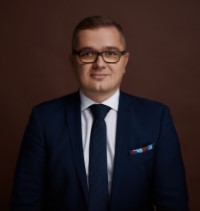


Sołtysiński Kawecki & Szlęzak (SK&S) is an independent Polish law firm with a team of more than 160 lawyers offering legal services to businesses from Poland and abroad. SK&S has 30 years of experience in providing comprehensive advisory services in all aspects of Polish and EU competition law, as well as representing domestic and international clients before the OCCP, the EC and the courts. SK&S obtains EC or OCCP approvals for concentrations, in addition to assisting in cases concerned with payment backlogs and securing contractual advantages. The firm represents entrepreneurs seeking compensation for damage resulting from the breach of competition rules. SK&S has one of the largest competition law teams in Poland, meaning the firm can successfully handle complex cases that require a number of lawyers.
Introduction
2021 was a record year in terms of the number of merger decisions issued by the President of the Office of Competition and Consumer Protection (OCCP) in Poland, which totalled 300. However, the majority of merger decisions pertained to straightforward transactions that were not accompanied by a detailed justification from the authority.
The OCCP issued only one prohibition decision (when it prohibited the acquisition of Eurozet by Agora at the beginning of the year), four conditional decisions (imposing remedies) and no gun-jumping decisions imposing the fines, which made selecting several interesting cases from 2021 a challenge. Nonetheless, the following cases summarised here provide valuable insight into the current merger control enforcement policies of the OCCP.
Agora/Eurozet
Although the OCCP’s decision was described in the previous edition of this guide, it is worth mentioning again owing to the events that occurred a few weeks before this article was due to be published.
The OCCP conducted the second phase review of the case in January 2021 and concluded that the proposed transaction could lead to distortions of competition in national and regional markets for radio broadcasting and advertisement. Allegedly, the quasi-duopoly – composed of the merged entity and its biggest competitor (Poland’s first commercial radio station, RMF FM) – would be significantly stronger than the remaining competitors, which would foster co-ordination between the merged entity and RMF.
Agora appealed and on 12 May 2022 the OCCP’s prohibition decision was changed by the Polish competition and consumer protection court to clear the acquisition of Eurozet by Agora. Supposedly, when orally explaining the grounds for the judgment, the court admitted that the theory of harm used by the OCCP was too speculative and noted the OCCP’s failure to provide credible evidence that the risk of co-ordinated effects was more than hypothetical. The judgment is not binding yet, as the OCCP has the right to lodge an appeal and publicly announced an intent to do so on its website. Written justification of the court’s judgment is not available yet either.
Kaufland/E.Leclerc
The OCCP has extensive experience in dealing with mergers in the fast-moving consumer goods (FMCG) retail sector. Several cases were subject to the OCCP’s scrutiny in 2021, following further consolidation in the sector.
One such case took place in Kielce, where the OCCP raised objections to the acquisition by Kaufland of assets used in operating a local branch of hypermarket chain competitors E.Leclerc. The OCCP took the view that this transaction could eventually restrict competition in the local market for retail sales of FMCG products in the HSD (hypermarkets, supermarkets and discount stores) channel.
Kaufland’s market shares in local markets are usually elevated due to the presence of Lidl, which is a prominent discount store operator in Poland. Although technically belonging to the same capital group as Kaufland, Lidl maintains its organisational autonomy; therefore, both companies regard each other as competitors.
Kaufland presumably realised that a negative decision from the OCCP was inevitable, so the company chose to withdraw the merger notification. (It is possible that the OCCP was not willing to accept remedies proposed by the notifying party.)
Ultimately E.Leclerc closed its retail shop in Kielce, which raised the question of whether consumers would have been better off with another Kaufland hypermarket in Kielce (as notified and intended by the company), as opposed to no store at all.
Eventually Kaufland announced its continued interest in acquiring the retail space previously occupied by E.Leclerc in Kielce, which is entirely possible on legal grounds because no prohibition decision was formally issued.
Carrefour/Tesco
The Tesco Group has been gradually reducing its operations in Poland for several years. Its competitors have acquired a number of locations where Tesco shops operated in the past. For this reason, acquisitions of property where Tesco stores were/are sited have been regularly reported to the OCCP.
One such case in March 2021 concerned Carrefour's purchase of part of a retail space used for a Tesco hypermarket in Wrocław, which is one of Poland’s biggest cities.
The OCCP’s proceedings revealed that the concentration might have reduced local market competition for retail sales of FMCG products in hypermarkets within a 20–25-minute drive from the acquired hypermarket.
Eventually the OCCP agreed to Carrefour’s proposed remedy of reducing the sales area in one of Carrefour's Wroclaw stores by 1,500 m². This made it possible to reduce Carrefour's market share in the local market, as the use of the sales area criterion is a key measure in determining market share, and therefore prevents negative effects resulting from the transaction.
This case clearly illustrates that the OCCP has maintained the hitherto practice of defining a separate market for shops with a sales area of more than 2,500 m². The OCCP’s position is surprising, especially in light of the increasing market position of discount shops, which usually have a significantly smaller sales area but fiercely compete with shops with bigger sales areas. Therefore, the authority seems to be more and more detached from market reality and consumers’ shopping preferences.
The Salling Group (Netto)/Tesco Polska
Another interesting case in the FMCG sector also related to the exit of the Tesco Group from Poland. The transaction contemplated by the Salling Group (which operates a retail chain of shops in Poland under the Netto brand) had a Community dimension but it was referred to the OCCP by the EC under Article 9(2)(b) of Regulation 139/2004.
This case is interesting on several grounds. Procedurally, the notifying party is obliged to submit an application for a planned concentration on a WID form (the Polish equivalent of form CO) when a case is referred by the EC to the OCCP.
Another aspect worth noting is that the OCCP issued two decisions in this case. A decision in February 2021 pertained to the acquisition of eight Tesco shops by the Salling Group (in Gliwice, Szczecin, Kraków, Gdynia, Kielce, Katowice, Ostrowiec Świętokrzyski and Warsaw). The Salling Group only planned to acquire only the shop in Warsaw permanently. The remaining shops were acquired temporarily and will have to be sold to other undertaking(s) in the future. The Salling Group has also committed to operate these shops under the Tesco brand until 31 August 2021.
The OCCP granted consents pertaining to the acquisition of control over the Tesco Polska company in a second decision, issued in March 2021. As part of the proceedings, the OCCP conducted a market investigation by sending questionnaires to all the Salling Group and Tesco Polska’s competitors active in the local markets for retail sales of FMCG products in the HSD channel, where the parties' pre-determined combined market share exceeded 20%.
This is another decision issued in 2021 that confirms the OCCP’s hitherto practice in defining markets for the retail sales of FMCG products in the HSD channel remains fully valid.
Polish Merger Control and Regulated Markets
The OCCP also issued three noteworthy decisions in the pharmacy market and healthcare services sector. These decisions showcase a potentially inconsistent approach by the OCCP to reviewing mergers in strongly regulated and sensitive markets. A varied set of structural and behavioural remedies was applied across these Phase II cases, each of which was ultimately conditionally approved.
DOZ/Euroapteka
A proposed acquisition of a smaller pharmacy chain (Euroapteka) by one of Poland’s largest pharmacy chains (DOZ) was assessed by the OCCP. The transaction was significant because it concerned a heavily regulated market. Competition has been statutorily limited, with new entries to the market heavily restricted (territorial quotas and ownership restricted to pharmacists only), price competition eliminated on all reimbursed products (which account for about 30% of general pharmacy sales and are a general traffic booster for pharmacies) and a blanket ban on all forms of advertising imposed. The market also showed a general consolidation trend, with the number of pharmacies across Poland falling.
One passage in the public communication of the decision was of particular note. The OCCP claimed it reviews only competition law matters in its assessment and does not incorporate or rule on regulatory matters. This was crucial given the remedy proposed, as well as the appraisal process itself.
The OCCP adopted a literal approach to defining and identifying dominance in the market, without taking into account the competitive specifics of the pharmacy market that result from the regulatory landscape. The final decision meant DOZ was obliged to divest a pharmacy on one local market, which is a complicated task for regulatory reasons (both in terms of legally performing the sale and finding an appropriate buyer).
This demonstrates a reluctance on the OCCP’s part to incorporate into its assessment the regulatory characteristics of the relevant market and their impact on competitiveness. Furthermore, it shows a preference for traditional competition law doctrines and practices, instead of adopting a more economics-based approach.
Air Liquide/Betamed
The OCCP assessed a proposed acquisition of a healthcare services provider by French multinational industrial gas supplier Air Liquide.
Interestingly, in adopting a relevant market definition, the OCCP concluded that the relevant market should be delimited to specific services financed by public funds. This probably justified the OCCP in requesting the opinion of the National Health Fund, which runs Poland’s public healthcare system. This is a curious development, given that such interactions between public bodies are scarce and not statutorily required in merger appraisal cases.
The enquiry concerned the National Health Fund’s views on the anticipated effects of the case. This question appeared slightly out of tune, considering the National Health Fund is not competent to review competition law matters. The OCCP fined the National Health Fund for abuse of dominance in the 2000s following its unfair contracting practices in awarding public financing to private healthcare providers.
The case ultimately involved a series of behavioural remedies, as well as one structural divestment remedy concerning the business of the parties in two regions in Poland. All remedies required a status quo with regards to participation in the public healthcare system and participation in new tendering procedures.
LUX MED/Lecznice Citomed
The third relevant case concerns leading private healthcare provider LUX MED’s proposed acquisition of a local private healthcare provider in Toruń.
The OCCP adopted a more consumer-centric approach to market definition, potentially omitting the particular geographic nature of the Toruń region, which arguably covers a wider area given the proximity of another large urban centre within a 50 km radius.
The decision included a host of various price-control and service standard remedies, mainly to ensure the market for diagnostic services remains competitive and is not ripe for abuse post transaction. Again, the proposed remedies placed a strong emphasis on ensuring a competitive status quo and ample competition for publicly financed healthcare services.
These latter two decisions, in contrast to DOZ/Euroapteka, demonstrate the OCCP’s willingness to address public health and regulatory concerns in the appraisal and proposal of remedies. The OCCP appears willing to consider a wider (and potentially less predictable) market approach if the appraised transaction has a strong public element to it, whereas purely commercial transactions will be assessed using more traditional and less flexible competitive tests and standards.
PKN Orlen/Polska Press
The previous year’s edition of the guide described the Polish government’s tendency to support the idea of the "national champions" – ie, large state-owned companies active in a variety of fields.
PKN Orlen is the most prominent example. Perhaps the most unusual transaction involving the oil giant was the expansion of its portfolio into a completely unrelated sector – that is, the acquisition of one of the biggest local and regional press publishers in Poland.
Despite some political concerns about the lack of overlaps and mainly conglomerate dimensions of the merger, it was unconditionally cleared by the OCCP in relatively smooth Phase I proceedings. Surprisingly, the decision was challenged by the Polish Commissioner for Human Rights (Ombudsman), who argued that the OCCP failed to assess larger issues such as the freedom of speech and plurality of media.
The Ombudsman formally appealed for an injunction to stop the execution of the transaction. The Court of Competition and Consumer Protection made the unprecedented decision to suspend the transaction until a final judgment is reached.
PKN Orlen proceeded with the acquisition of shares in Polska Press despite the court’s ruling and exercised its rights by appointing new members of the management board. The changes have been formally registered in the Polish National Court Register (trade register), which created an unheard-of legal duality when different divisions of the same court – the District Court of Warsaw – effectively reached two contradictory rulings. The outcome of the proceedings and their impact on the legal system largely remains to be seen.
PKN Orlen/PGNiG
Another step in the implementation of the Polish government’s "national champion" strategy involved the consolidation of two energy giants – PKN Orlen and PGNiG (an oil and gas company with a significant overseas presence).
The transaction was subject to notification to the EC, owing to its magnitude. However, the notifying party used its power and requested a referral of the case to the national authority. PKN Orlen argued that, although both companies are active in a number of markets beyond the territory of Poland, the most significant impact of the consolidation will be domestic and therefore the OCCP is best fitted to examine the potential anti-competitive effects of the transaction.
The EC consented to the request. The OCCP almost instantly initiated Phase II proceedings following the referral, owing to the amount of overlaps and potential vertical relations in the markets on which both companies are active. The proceedings concluded after 10 months with a conditional consent.
The remedy in question pertained to divestiture of one of PGNiG’s subsidiaries – Gas Storage Poland. The company is involved in operating PGNiG’s gas storage facilities and, in the opinion of the OCCP, the merged entity would have an economic incentive to refuse other market players access to its gas storage facilities. The OCCP therefore requested that the transaction is implemented on the condition of Gas Storage Poland’s divestiture to an independent third-party undertaking.
The decision – and arguably not very demanding remedy imposed by the OCCP – once again sparked some controversy, owing to the allegedly lenient approach of the OCCP to concentrations involving state-owned companies.
Sołtysiński Kawecki & Szlęzak
Jasna 26
00-054 Warsaw
Poland
+48 22 608 70 00
+48 22 608 70 70
office@skslegal.pl www.skslegal.pl
Trends and Developments
Authors
Sołtysiński Kawecki & Szlęzak (SK&S) is an independent Polish law firm with a team of more than 160 lawyers offering legal services to businesses from Poland and abroad. SK&S has 30 years of experience in providing comprehensive advisory services in all aspects of Polish and EU competition law, as well as representing domestic and international clients before the OCCP, the EC and the courts. SK&S obtains EC or OCCP approvals for concentrations, in addition to assisting in cases concerned with payment backlogs and securing contractual advantages. The firm represents entrepreneurs seeking compensation for damage resulting from the breach of competition rules. SK&S has one of the largest competition law teams in Poland, meaning the firm can successfully handle complex cases that require a number of lawyers.